White clothing, a red sash and, above all, a red scarf tied around the neck create San Fermín’s most recognisable image. The dress code is simple but expressive: it makes a shared festival moment visible without requiring a costume. Understanding its meaning and use helps visitors join naturally and respectfully.
Why do people wear white and red?
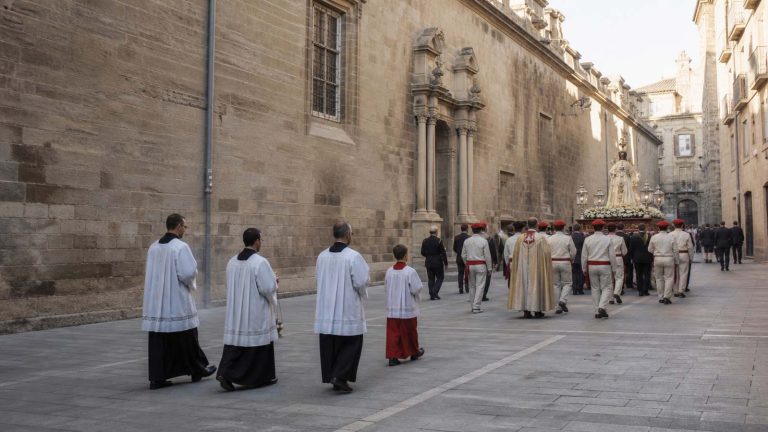
White and red have become the visual code of San Fermín. White creates a common base; the red scarf and sash concentrate the symbolic energy of the celebration. The exact origins of every festival custom have nuances and changes over time, so it is better not to reduce the clothing to one closed explanation. In practice, it is an established popular tradition and a sign of collective participation.
The clothing is shared but personal. Some people keep scarves from previous years, receive one as a gift or add family and peña details. There is no single way to belong to the festival.
The red scarf: when to wear it and why it matters
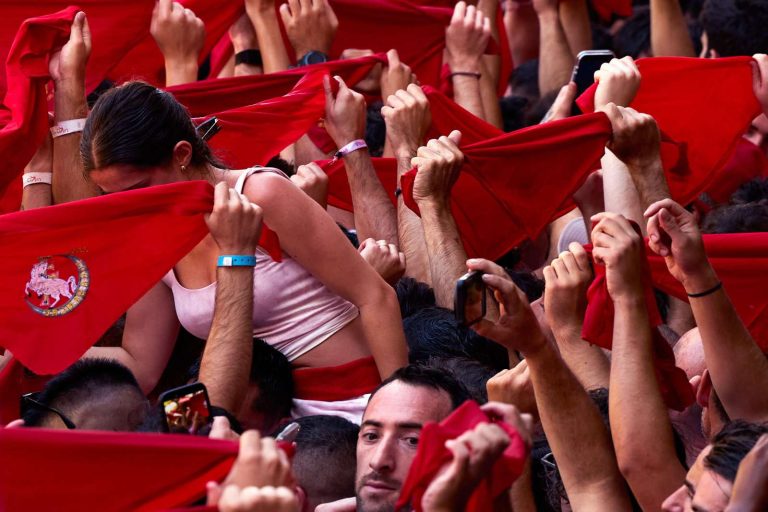
The red scarf is the best-known element. Many people wait for the official opening before tying it around their necks; the gesture marks the city’s entry into festival time. Visitors should not treat it as a strict rule. Observe, ask with respect and follow safety and mobility information if attending the opening.
The red sash is commonly worn at the waist. Choose clothing that is comfortable: San Fermín involves walking, waiting, entering and leaving busy streets and spending long hours outdoors. Light layers, stable footwear and practical choices matter more than a perfect look.
Dress for San Fermín without turning it into a costume
A white shirt or T-shirt, white or light trousers, a red scarf and an optional red sash are enough. Adding unrelated novelty accessories can make the outfit feel like a costume rather than respectful participation. This is not about imposing aesthetics; it is about understanding the difference between accompanying a local custom and consuming it from outside.
For a first visit, look at how the city dresses, use clothes you already own and keep the result natural. White and red do not require absolute uniformity: peña scarves, family details and group symbols all add nuance.
White and red as a city’s language
The power of the clothing lies in its scale. Thousands of people in white and red transform an ordinary street into a recognisable festival space. But the photograph does not tell the whole story. The scarf has meaning because it belongs to a festival with local ties, repeated rituals and many different ways of taking part.
Wearing the colours does not give anyone permission to crowd others, enter unsafe spaces or ignore instructions. It can instead be a reminder that you are joining something that existed before your arrival.
What to bring beyond white and red
Choose closed, comfortable shoes suitable for walking; sun protection; a reusable water bottle where practical; and a light extra layer for changes in temperature. Keep bags compact so that they do not obstruct busy areas. Preparing lightly supports a better experience for both you and those around you.
White and red are recognisable, but comfort should come first. Pamplona involves walking, waiting, changes in temperature and, at busy moments, moving carefully around other people. Closed, stable shoes and a light layer are usually more useful than an outfit designed only for photographs.
The scarf and sash are meaningful because they are simple. There is no need to turn them into a costume or to assume that one look represents everybody. Families, peñas, friends and first-time visitors all bring their own variations to the same visual language.
What matters most is the attitude behind the clothing. Wearing white and red does not replace reading the official programme, respecting safety arrangements or making room for the people who live the festival every year. The colours can be a way to join the atmosphere; care for the city is what makes that participation respectful.
What you wear should support the way you move through the city. Festival days can involve long walks, waiting outdoors and changing temperatures, so clothes that you already know are comfortable are usually the best choice. Keep personal belongings light, choose footwear that feels secure on old-town streets and avoid accessories that make it harder to share a busy space with other people.
The white-and-red palette is a visible way to join the atmosphere, not a substitute for learning how the festival works. Read the current programme, follow public instructions and leave room for residents, workers and other visitors. The most natural outfit is one that feels practical and recognises that the tradition belongs to a living city, not a costume event. It should make the day easier, not more complicated.
Frequently asked questions about San Fermín clothing
Is white and red compulsory?
No. It is a widespread tradition, not an obligation. Comfort and respect for the setting matter most.
When is the red scarf worn?
Many people tie it after the official opening, then wear it during the festival days.
What does the scarf mean?
It is the main visual symbol of San Fermín dress and part of the shared white-and-red festival code.
Is a red sash necessary?
No. It is traditional but optional; if you wear one, make sure it is comfortable.
What footwear is recommended?
Stable, comfortable footwear appropriate for walking several hours through the old town and busy streets.