The Running of the Bulls is one of Pamplona’s best-known San Fermín moments. Before the morning run, however, there is another, much quieter ritual: the Encierrillo. Both relate to moving the herd and preparing the festival, but they are not the same, nor are they experienced in the same way. Understanding the difference adds cultural context to San Fermín and moves beyond a simplified view of the celebration.
The Encierrillo takes place at night and calls for a different kind of attention. There is less noise, more waiting and a clearly regulated viewing framework. The Running of the Bulls, by contrast, opens the morning with public intensity and an internationally recognisable image. There is logistical and symbolic continuity between the two, but also a clear difference in pace, access and experience. This guide explains what distinguishes them and why knowing both helps visitors understand the city during the festival.
What is the San Fermín Encierrillo?
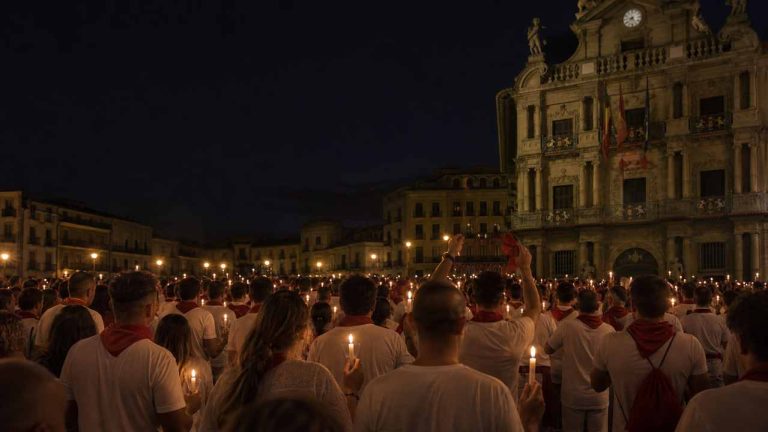
The Encierrillo is the night-time transfer of the herd from the Gas corrals to the Santo Domingo corrals. It is shorter and more contained than the morning run, taking place at night within a regulated observation system. Pamplona City Council sets out the access conditions, route and safety measures for each edition; these can change from one year to the next.
Its character is different from that of the Running of the Bulls. It is not presented as an open run for participants, but as a moment to observe. Silence is part of the experience: the movement of the herd, the fencing, the night light and the waiting create a concentrated atmosphere. For that reason, it should not be treated as an improvised spectacle. Anyone attending should respect the rules, capacity limits, any required passes and the directions of the staff in charge.
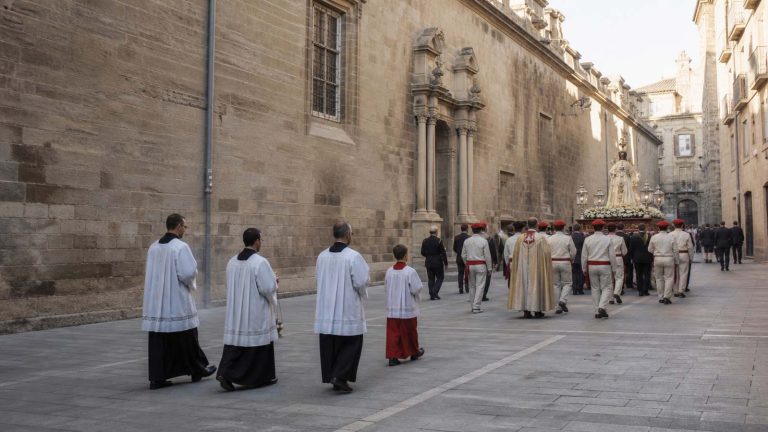
The Encierrillo shows that the Running of the Bulls does not begin when the morning rocket is fired. Preparation, operational care, routes and a city organised so that every moment has its place all come beforehand. This perspective is especially valuable for visitors who want to understand San Fermín culturally, rather than only through its most widely circulated image.
What is the Running of the Bulls, and why is it different?
The Running of the Bulls is the morning run held on festival days along an urban route protected by wooden fencing. It is one of San Fermín’s central events and brings together runners, organisers, media and spectators at different points along the route. Its intensity, brevity and international profile naturally attract considerable attention.
Yet the Running of the Bulls should not be understood as an attraction without context. It is governed by strict rules and carries real risks. Anyone who does not know the route, the rules or their own capabilities should not decide to take part impulsively. Watching it also requires planning: choose authorised spaces, respect street closures and follow official directions. Practical information for every edition should always be checked against municipal sources and the current official programme.
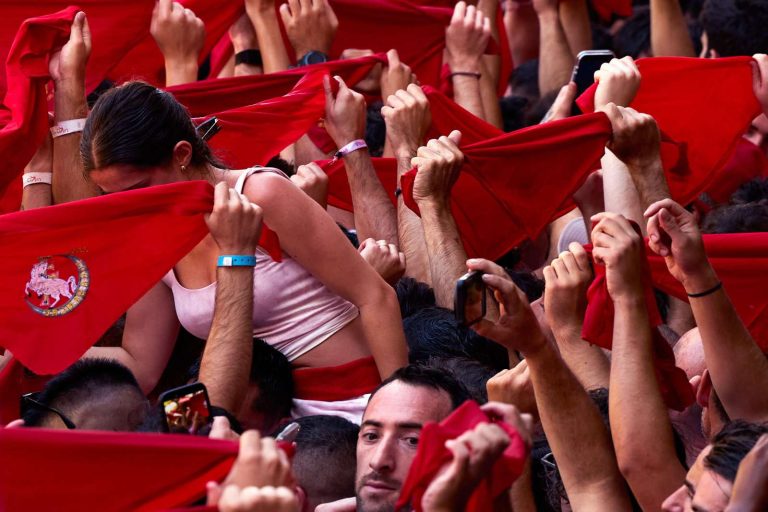
From a cultural perspective, the run is one part of a wider whole. It connects with the Encierrillo, the diana morning music, the Giants’ morning appearances, the life of the peñas and the city’s festival calendar. The San Fermín guide helps place these elements in relation to one another rather than treating them as isolated scenes.
Main differences between the Encierrillo and the Running of the Bulls
The most obvious difference is the time of day. The Encierrillo takes place at night; the Running of the Bulls takes place in the morning. The type of public presence also changes. The former is observed in a more limited and regulated setting, while the latter involves greater exposure, participation and spectator attendance.
The route is another decisive element. The Encierrillo transfers the herd between corrals, whereas the Running of the Bulls takes the bulls along the traditional urban course towards the bullring. Although both use safety infrastructure and measures, they do not serve the same purpose. One prepares the morning’s starting point; the other forms part of the festival’s best-known public ritual.
Finally, the atmosphere clearly separates them. Waiting, silence and attention to the herd’s passage shape the Encierrillo. During the morning run, the city’s pulse is higher: the day begins early, streets close and the rhythm is concentrated into a few minutes. Neither is “better” than the other; they offer different ways of approaching a complex tradition.
How to approach both moments responsibly
The first recommendation is not to improvise. San Fermín includes moments of very high attendance, and not all are suitable for every visitor. If your interest is cultural, the Encierrillo can offer a more contained perspective, provided official conditions for attending are in place. If you want to watch the Running of the Bulls, choose an authorised viewpoint and arrive in good time, without seeking shortcuts or risk areas.
Do not plan a visit using details from a previous edition. Times, access, passes and safety rules are updated. The municipal Encierrillo page is a useful source for learning how a specific edition works, but always check its publication date before using it to plan. Official information takes priority over rumours, old videos or undated posts.
It is also worth widening your view after those minutes. Walking through the historic centre, listening to the music, watching the Giants go by or learning about Pamplona’s traditions helps explain how the city lives through the rest of the day. San Fermín gains depth when it is not reduced to a single event.
Looking beyond the run
For many people, the first image of San Fermín is the Running of the Bulls. That is understandable: it is powerful, brief and widely shared. A culturally rich visit begins when you ask what happens before it, what happens after it and who sustains each tradition. The Encierrillo offers part of that answer. It reveals a city that prepares, regulates and observes; a festival with different layers of intensity.
This distinction also supports a more respectful way of travelling. The aim is not to seek excitement at any cost, but to understand where you are and why certain rules exist. Safety, the wellbeing of people and care for public space are not external additions to the tradition: they are necessary conditions for it to continue.
For official information on a specific Encierrillo, consult Pamplona City Council’s San Fermín Encierrillo information page. That page relates to a particular edition, so before travelling, always confirm current conditions in the relevant official programme.
Frequently asked questions about the Encierrillo and the Running of the Bulls
Are the Encierrillo and the Running of the Bulls the same thing?
No. The Encierrillo is the night-time transfer of the herd between corrals; the Running of the Bulls is the morning run along the traditional urban route. They are related, but they have different purposes and ways of attending.
Can you run in the Encierrillo?
It should not be understood as an open run. The Encierrillo takes place under regulated access and observation conditions. Check the official rules for the current edition before planning a visit.
What time does the Encierrillo take place?
The time can vary by edition and organisational decisions. Always check Pamplona City Council’s current official programme rather than relying on information from previous years.
Where can I watch the Pamplona Running of the Bulls?
There are different viewing options, and each is subject to regulation, capacity and safety rules. The best choice depends on the edition, the point along the route and the official information available at that time.
How can I understand the Running of the Bulls without taking part?
Prepare with official information, watch from permitted areas and complement the moment with material on Pamplona’s history, rituals and culture. That way, the experience does not depend on only a few minutes of the run.